
01
Aluminium and PVC are different processes
Aluminium corners are mechanically joined; PVC corners are welded and cleaned. A workshop doing both needs to be equipped for both, not for the average of the two.
Machine category 09
Cutting, routing and welding for window and door fabrication — where a fraction of a degree decides whether the frame seals.
Window fabrication is unforgiving about angles. A cut that is half a degree out closes on the bench and gaps on the wall, and the complaint arrives months later when the weather changes.
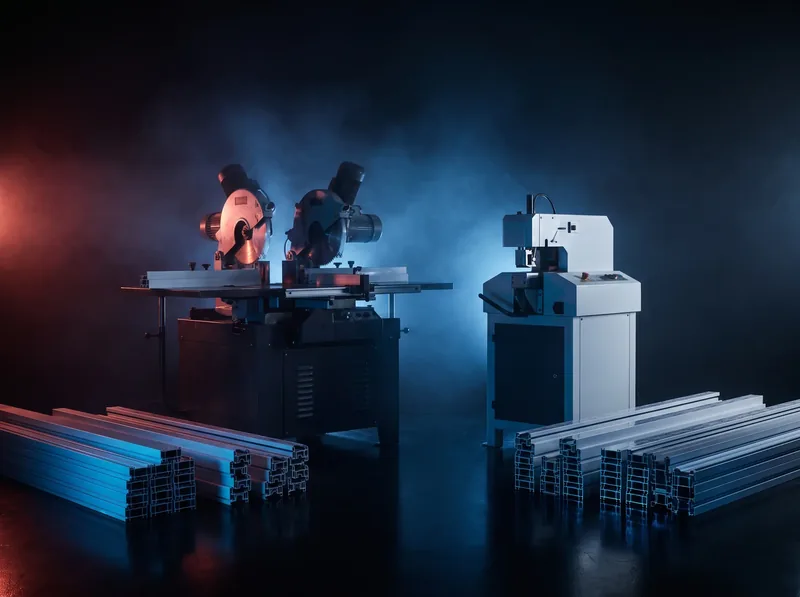
The machines in this category exist to take that variable out of the operator's hands: repeatable mitres, repeatable routing for hardware, and a weld or crimp that holds the corner square.
01
Aluminium corners are mechanically joined; PVC corners are welded and cleaned. A workshop doing both needs to be equipped for both, not for the average of the two.
02
A double-head saw sets an angle once and cuts both ends to length, which is where the repeatability comes from. A single head costs less and is slower and more dependent on the operator.
03
The routing station determines which locks, handles and hinges you can fit without hand work. Check it against the systems you actually sell.
04
Aluminium swarf and PVC dust both need collecting, and profile offcuts eat floor space quickly. Plan the layout with the machines.
Yes, and many do — but it means two corner processes and two sets of consumables. We specify the shared stations once and the process-specific ones separately so nothing is bought twice.
An engineer reads every request. Usually the same working day.