
01
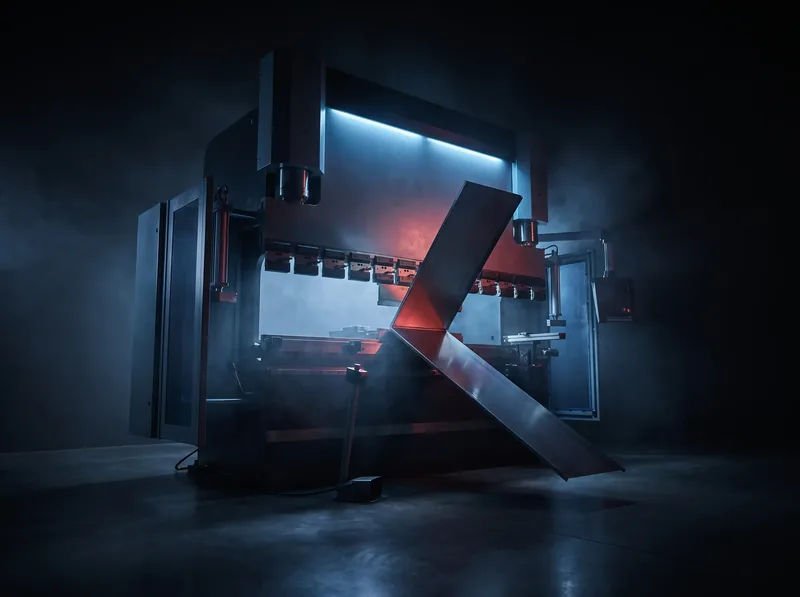
Bending force follows material and length, not thickness alone
A long bend in stainless needs far more than the same thickness in aluminium over a short length. Tell us the worst-case bend you actually run and we size from that.
Machine category 03
Bending, shearing, rolling and plasma cutting — the line that turns flat stock into a finished assembly.
Sheet work is a sequence, not a machine. Cut, bend, roll, join — and the bottleneck moves as soon as you fix one station. The useful question is which step is currently deciding what you can promise a customer.
We supply the stations individually and as a line, and we size them against each other so the press brake is not waiting on the shear, or the other way round.
01
A long bend in stainless needs far more than the same thickness in aluminium over a short length. Tell us the worst-case bend you actually run and we size from that.
02
On short runs, the time lost setting up outweighs the time spent bending. A programmable gauge pays for itself in a job shop long before it does in a factory making one part all week.
03
Punches and dies are what actually make the bend. Buying a brake without budgeting the tooling for your range of radii is the most common way a good machine underperforms.
04
A shear is fast and cheap for straight cuts. A plasma or fiber table earns its place the moment parts stop being rectangles. Many shops need both, and the split is worth working out before buying either.
Yes — cutting, bending, rolling and joining, specified against each other and against your floor space so the stations balance rather than queue.
Yes, punches and dies are stocked as part of the tooling range, so a change of radius does not mean a change of supplier.
An engineer reads every request. Usually the same working day.